
Are Kitchen Renders Accurate? What They Show Well — and What They Don’t
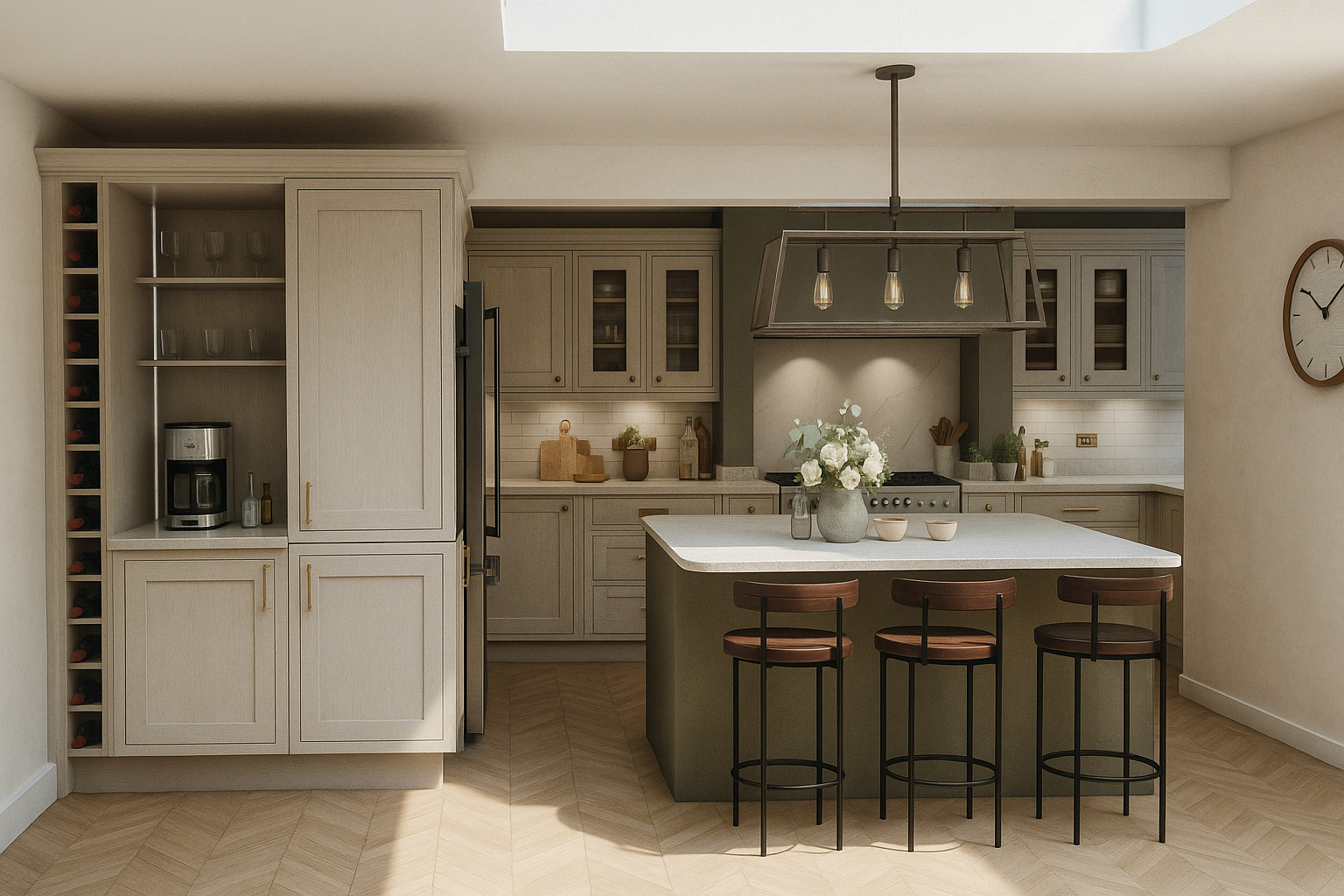
Kitchen renders have become a huge part of the design process. They’re impressive, detailed and often the first thing people fall in love with when planning a new kitchen.
But one of the most common questions we’re asked is:
“Will my kitchen actually look like the render?”
The honest answer is: mostly — but not perfectly.
And understanding why will help you make better decisions and avoid disappointment later.
What Kitchen Renders Are Very Good At
Let’s start with the positives, because modern renders are incredibly powerful tools when used correctly.
Layout and proportions
Renders are excellent at showing:
- cabinet layout
- spacing and clearances
- island size and positioning
- appliance placement
If a layout works in a render, it will work in real life.
Design intent
Renders clearly communicate:
- whether a kitchen feels modern, classic or transitional
- how bold or subtle a colour scheme is
- how different elements work together
They’re brilliant for understanding the overall design direction.
Early problem spotting
A good render can highlight issues early, such as:
- awkward sight lines
- overcrowded walls
- poor balance between tall units and open space
This is where renders really earn their keep — long before anything is ordered.
Where Kitchen Renders Can Be Misleading
This is the part many kitchen companies avoid talking about, but it matters.
Lighting is never identical
Renders use simulated lighting. Your home uses:
- natural daylight (which changes throughout the day)
- artificial lighting with different colour temperatures
- shadows created by real objects and surfaces
A render might look warmer, brighter or more dramatic than the finished space — especially on a backlit screen.
Screen colours vs real colours
Every screen displays colour differently.
That means:
- a green can look warmer on one phone and cooler on another
- subtle undertones can shift dramatically
- matte finishes often look flatter or richer on screen than in reality
This is why physical samples always matter more than pixels.
Materials behave differently in real life
Renders can’t fully replicate:
- texture
- reflectivity
- grain variation
- how materials change under different lighting
For example, timber, quartz and painted finishes all react differently once installed — especially in larger areas.
Renders are perfect — homes are not
Renders don’t show:
- slightly uneven walls
- minor installation tolerances
- natural material variation
- real-world joins and interfaces
That doesn’t mean your kitchen won’t look great — just that real spaces are more nuanced than digital ones.
So… Are Kitchen Renders “Accurate”?
A better way to think about it is this:
"A render is an accurate representation of the design, not a guarantee of an identical final appearance."
When used properly, a render should be treated as:
- a design communication tool
- a decision-making aid
- a way to understand layout and intent
Not as a photographic promise.
How to Use Renders Properly (and Avoid Disappointment)
Here’s what we recommend clients focus on when reviewing renders:
- Layout and flow, not exact lighting mood
- Colour relationships, not precise shade matching
- Proportions, not millimetre-perfect detail
- Overall feel, not individual reflections or highlights
Then confirm key decisions using:
- real door samples
- worktop samples
- appliance specifications
- on-site surveys
That combination gives the best outcome every time.
Our Approach to Kitchen Renders
We use renders to:
- explore ideas safely
- test layouts before committing
- help clients visualise possibilities
But we’re always upfront that:
- materials behave differently in real spaces
- lighting changes everything
- physical samples matter more than screens
Honesty here leads to better kitchens — and happier clients.
Final Thoughts
Kitchen renders are incredibly useful — just not infallible.
When you understand what they’re great at and where their limits are, they become one of the most valuable parts of the design process rather than a source of confusion later on.
If you’d like help interpreting renders properly or want to see how a design translates from screen to real life, we’re always happy to talk it through.