What is an In-Frame Kitchen?
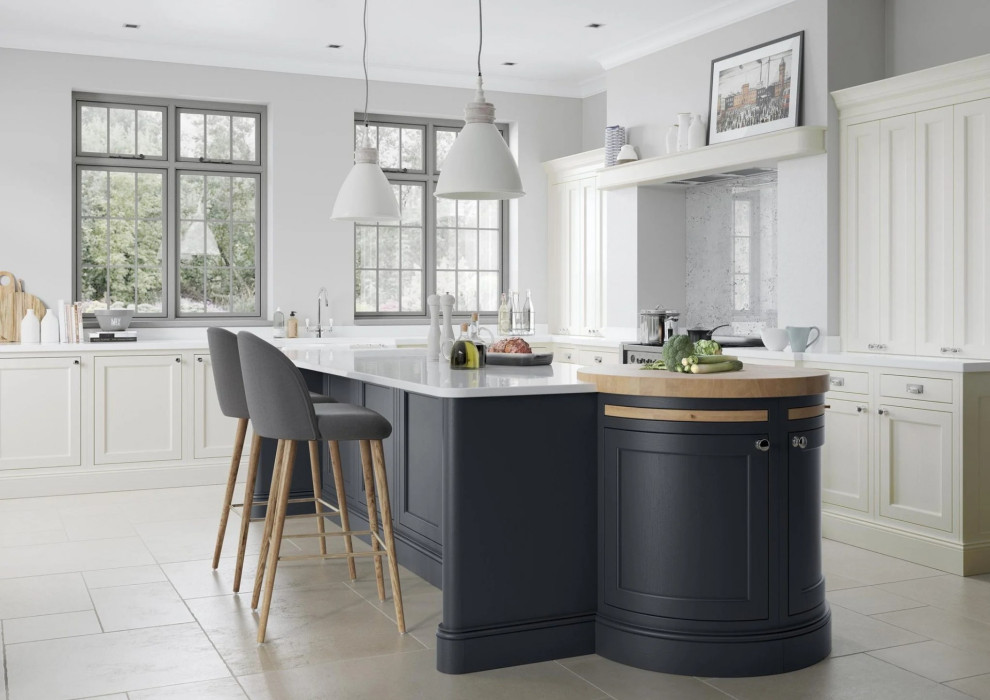
If you've been researching kitchens, you've probably come across the term "in-frame" — and possibly wondered exactly what it means and whether it's worth the premium. This article explains in plain terms what an in-frame kitchen is, how it differs from a standard kitchen, and who it's right for.
The Short Answer
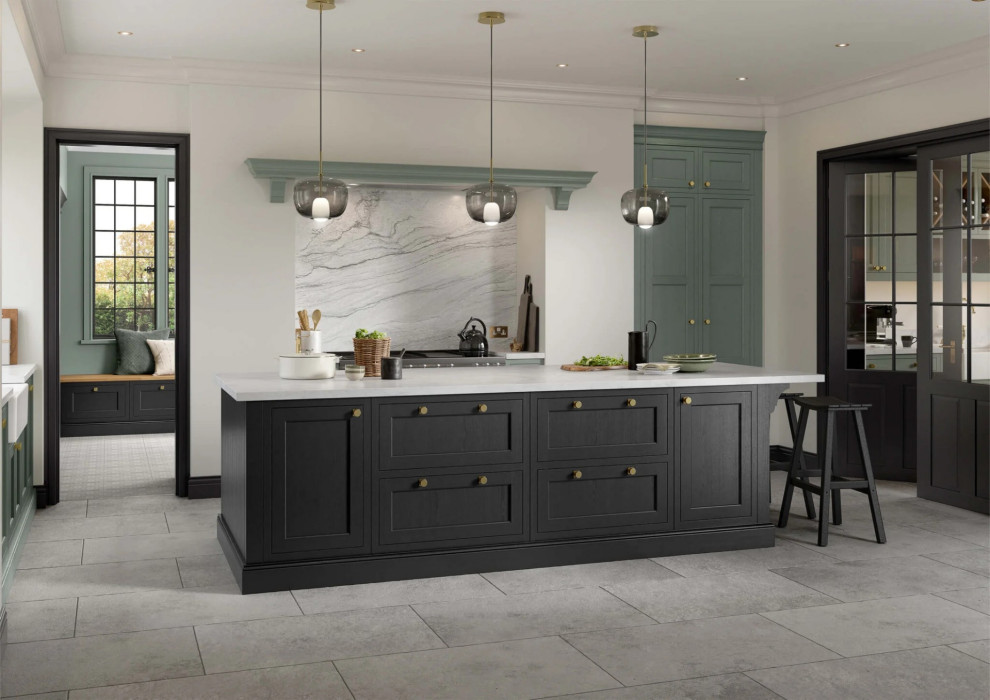
In a standard kitchen, doors hang on the outside of the cabinet box (called the "carcass"). In an in-frame kitchen, doors sit within a structural timber frame that forms part of the cabinet itself. The frame is visible around every door and drawer, creating a characteristic recessed, symmetrical appearance and a sense of quality and craftsmanship that's immediately apparent.
In a nutshell: Overlay (lay on) = doors hang on the outside of the box. In-frame (Inset) = doors sit within a structural frame that is part of the cabinet construction. The difference is visible, tactile, and meaningful.
The Construction in More Detail
In a standard overlay kitchen:
- The cabinet carcass (the box) is built first
- Doors are hung on hinges attached to the inside face of the carcass
- The doors cover the front face of the box, overlaying it
In a true in-frame kitchen:
- A solid timber frame is constructed as part of — and structurally integrated with — the cabinet
- Doors are hung within the frame opening, like a door in a house
- The frame face is visible as a border around every door and drawer
- The cabinet opens and closes differently: you can feel the door settle into the frame, rather than swinging freely outward
The result is a kitchen that looks and feels more like furniture than fitted cabinetry. Quality in-frame kitchens use traditional joinery techniques for the frame construction such as a mortise and tenon joint or more modern techniques such as dowels, dominos or loose tenons.
In-Frame vs In-Frame Effect: An Important Distinction
Many kitchen companies advertise "in-frame kitchens" that are actually "in-frame effect" — an important distinction:
- True in-frame — the frame is structural and forms part of the cabinet construction. The door literally sits within it. More complex and expensive to manufacture.
- In-frame effect — a frame-like moulding or profile is applied to the front of a standard overlay cabinet to mimic the in-frame appearance. Less expensive. Looks similar from a distance but lacks the quality of construction of a true in-frame.
Both are legitimate choices — an in-frame effect kitchen gives you most of the visual character at a lower price point. A true in-frame gives you the full furniture-quality construction. We offer both and are transparent about the difference.
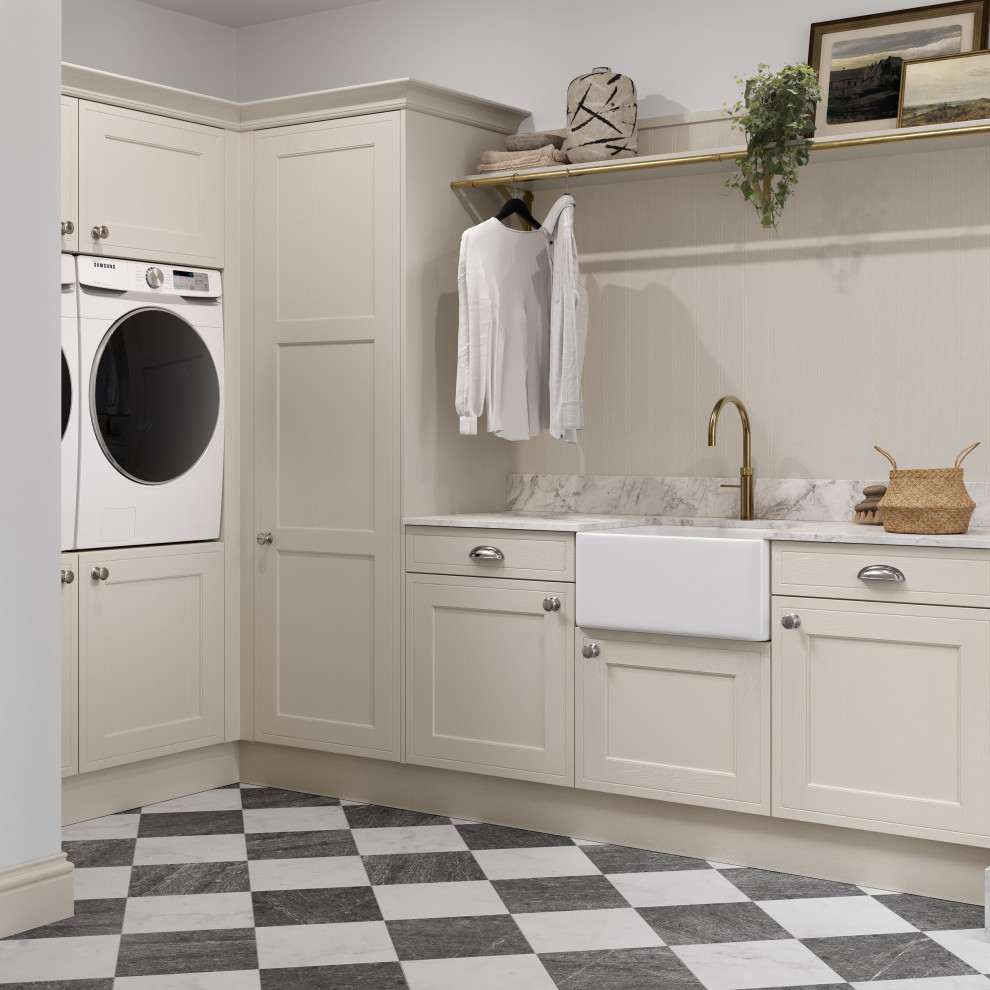
This is the "Wakeley" range which is an In-frame EFFECT door.
Who is an In-Frame Kitchen Right For?
In-frame kitchens are particularly well-suited to:
- Period and character properties — the craftsmanship and visual depth of an in-frame kitchen belong in an older home in a way that a contemporary overlay kitchen sometimes doesn't
- Homeowners where quality is the priority — if you want a kitchen that feels genuinely handcrafted and will last 30+ years, in-frame is the gold standard
- Larger, more formal kitchens — in a generous kitchen diner or open-plan space, the visual statement of an in-frame kitchen is worth the investment
- Farmhouses and rural properties in Leicestershire — the organic, furniture-quality aesthetic of in-frame suits the character of rural and village homes very well
In-frame kitchens are not always the right choice for:
- Very contemporary, handleless designs — the frame contradicts the clean-line aesthetic
- Tighter budgets — the premium over a quality overlay kitchen is real, typically 25–40% more
How Much Does an In-Frame Kitchen Cost?
In-frame kitchens sit at the premium end of the market. At Luxe Kitchen Designs, bespoke in-frame kitchens for Leicestershire homes typically range from £20,000 to £60,000 supplied. Depending on size, finish, worktops, and appliances.
For context, the equivalent kitchen in a high-quality overlay construction might range from £15,000 to £40,000. The in-frame premium is real but reflects genuinely different and more complex construction.
Frequently Asked Questions
Can an in-frame kitchen be handleless?
Technically yes, but it's rarely done — the frame and handleless aesthetic work against each other. In-frame kitchens typically use cup handles, knobs, or bar handles that complement the furniture-quality construction. If you want a handleless look, a high-quality overlay kitchen is the better base.
How do I know if a kitchen I'm being quoted for is truly in-frame?
Ask the supplier to explain the construction in detail. In a true in-frame, the frame is structural and integral to the cabinet. In-frame effect kitchens will show this if you look behind a door. The door will be overlaying the carcass rather than sitting within a frame opening. We're always happy to explain the construction of our kitchens in full.
Does an in-frame kitchen add more value to a property?
A quality kitchen adds value regardless of construction type. An in-frame kitchen, however, tends to be more strongly associated with premium properties. For example, Estate agents and buyers familiar with kitchen quality will note the difference. In the right property, it can be a significant differentiator at sale.
Interested in an In-Frame Kitchen in Leicestershire?
We'll visit your home, bring samples of both in-frame and in-frame effect options, and help you decide what's right for your home and budget.
Call us: 0116 216 7986
See the Leesthorpe Kitchen as an example of a true in frame kitchen or see The Scraptoft Kitchen as an example of an in-frame effect kitchen.