
KITCHEN LIGHTING GUIDE
Under-cabinet LEDs, island pendants, and bespoke lighting explained.
Kitchen lighting is almost always under-budgeted and thought about too late. It is also one of the things clients comment on most once a project is finished, either because it has transformed the room or because they wish they had done it properly. The good news is that the basics are not expensive, and they make a significant difference.
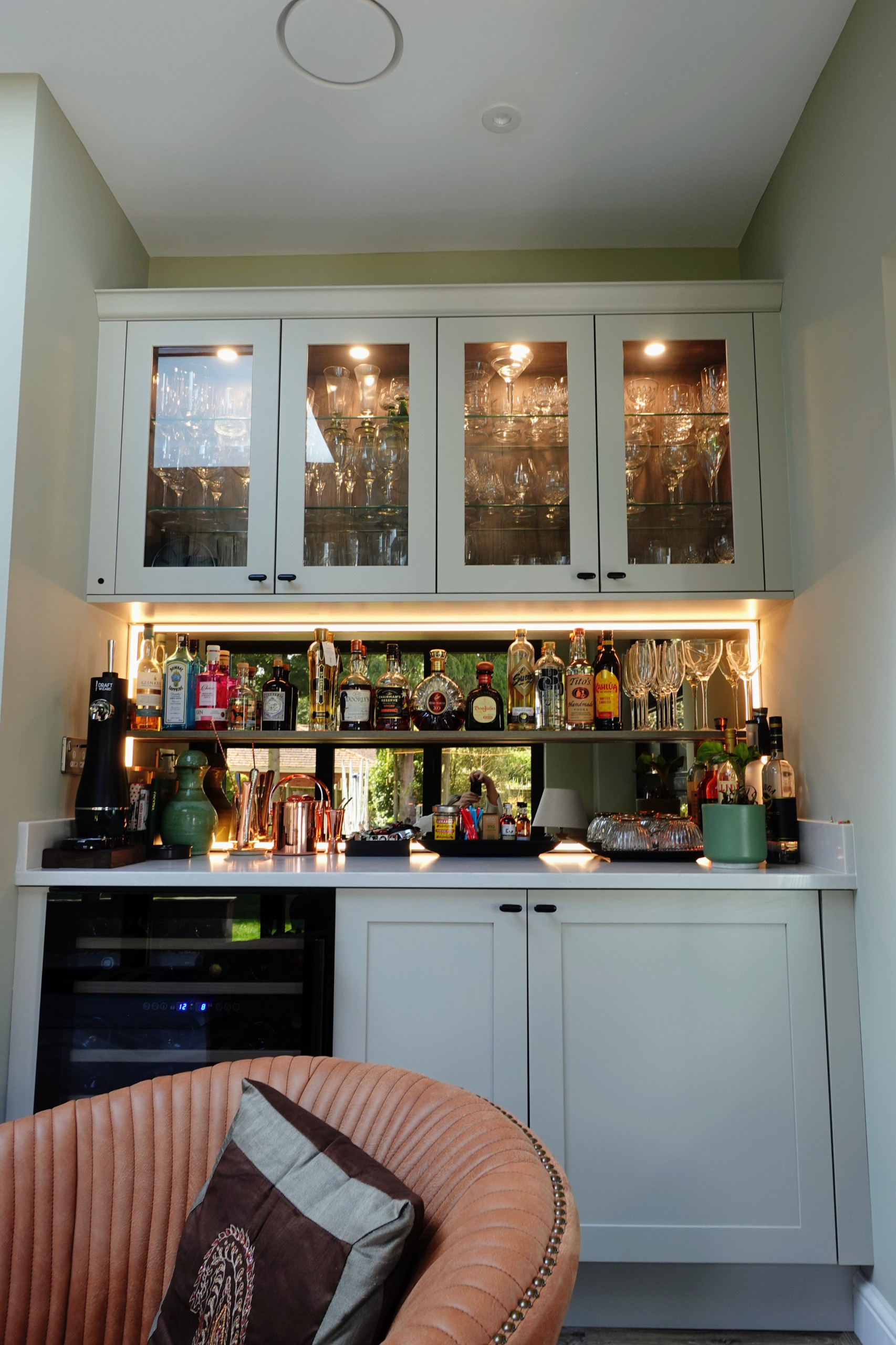
THE THREE LAYERS
A well-lit kitchen generally has three types of light working together:
- Task lighting. Lights that illuminate where you actually work. Under-cabinet LED strips are the most important element. Without them, you are standing in your own shadow at the worktop.
- Ambient lighting. The general background light in the room. Ceiling downlights provide this. Position matters: downlights placed directly above base units cast shadows onto the worktop. They should sit forward of the units, over the working zone.
- Feature lighting. Lights that add character rather than pure function. Pendants over an island, LEDs inside glazed cabinets, plinth lighting. These make a kitchen feel finished rather than just functional.
UNDER-CABINET LIGHTING
LED strip lighting under wall units is the most cost-effective lighting upgrade in a kitchen. We source under-cabinet lighting from Hafele's comprehensive range, which covers warm white, cool white, and tunable options where you can adjust the colour temperature. Budget £150–400 for a typical kitchen depending on the number of runs and whether you opt for a dimmer.
One important point: the cable routes for under-cabinet lighting need to be agreed with your electrician before the wall units go on. Once the units are in place, surface-mounted trunking is the only option. Plan it in advance.
PENDANT LIGHTS
An island without a pendant is a missed opportunity. Height matters: too high and they do not create atmosphere; too low and they are in the way. A 600 to 900mm drop from ceiling to base is a useful starting point for standard 2.4m ceiling heights, though you will need to adjust for higher ceilings.
Number of pendants: one statement pendant or a run of three smaller ones tends to work better than two, which can look unbalanced unless the island is very long. Finish should relate to your other hardware. Brass pendants with chrome taps looks unresolved.
COLOUR TEMPERATURE
Colour temperature is measured in Kelvin and has a bigger effect on how a kitchen feels than most people realise. As a general guide:
- 3000K for feature and accent lighting, including under-cabinet strips, internal cabinet lights, and wall lights. This is a warm white that feels inviting and works well with timber, stone, and painted cabinetry.
- 4000K for ceiling and room lighting. Slightly cooler and brighter, which makes the room feel energetic and clear. Good for the main ceiling downlights where you want good visibility across the whole kitchen.
Mixing the two temperatures in the right places, warmer accents with cooler overhead light, gives a kitchen that is both practical and atmospheric. Fitting everything at the same temperature tends to flatten the space.
BESPOKE LIGHTING SOLUTIONS
We work with a local Leicestershire lighting specialist who offers solutions well beyond standard off-the-shelf products. This includes digitally mapped LED systems where every section of lighting can be individually programmed, different scenes for cooking, dining, and relaxing, adjustable colour temperatures through the day, and lighting sequences controlled from a single switch or phone.
For larger kitchen projects, open-plan kitchen-diners, and extensions where the lighting needs to work across multiple zones and uses, a conversation with our lighting contact is worth having early in the design process.
The most common lighting mistake is forgetting to plan cable routes before installation. Cables for under-cabinet lights, island pendants, and plinth lighting all need to be in place before cabinetry and worktops go in. Raise it with your electrician at the start of the project, not the end.
FREQUENTLY ASKED QUESTIONS
What colour temperature should kitchen lighting be?
Around 3000K for feature and accent lighting such as under-cabinet strips, internal cabinet lights, and wall lights. Around 4000K for your main ceiling downlights. The combination of a slightly cooler overhead light with warmer accent lighting gives a kitchen depth and atmosphere that a single temperature throughout does not achieve.
How many ceiling downlights do I need?
A rough guide is one downlight per 1.5 to 2m² of ceiling area, positioned in a grid rather than following the cabinet line. Give your electrician a brief about task zones, as it helps them position lights where they actually make a difference rather than where they are easiest to install.
Can I add lighting inside glazed cabinets?
Yes, interior cabinet lighting is available through Hafele and works particularly well in glazed-door units and open shelving sections. It adds atmosphere and makes the contents far more visible. Plan the cable route before the units go in.
Should island pendant lights match the kitchen handles?
They should relate in finish. Brass pendants with brass handles and a brass tap feels cohesive. Mixing finishes between major fixtures tends to look unresolved, even if each piece is attractive on its own.