KITCHEN SINK & TAP GUIDE
Types, materials, brands, boiling water taps, and what we actually recommend.
Sinks tend to be one of the last decisions people make when choosing a kitchen. They are also one of the most expensive mistakes to fix if you get them wrong, because changing a sink after the worktop has been templated and cut means replacing the worktop too. Worth thinking about early.
We have written a longer honest guide on this on our blog: Which sink is best for my kitchen? This page summarises the key points and covers the brands we use.
SINK TYPES
Before you choose a material or brand, you need to know what type of sink you are looking for. This is largely dictated by your worktop choice.
Inset
Sits on top of the worktop. The standard choice for laminate worktops, as the sink rim covers the cut edge and prevents water ingress. Usually comes with an integrated draining board.
Undermount
Sits below the worktop so you see the polished edge of the stone or quartz. The most versatile option and our most commonly specified type. Works in any kitchen style and with any solid worktop material. Cannot be used with laminate.
Belfast / Butler
Works similarly to an undermount but with the front face of the sink also exposed. Usually larger, and very well suited to traditional and farmhouse-style kitchens. Both names refer to the same product today, though historically they were different sizes.
Integral
Formed seamlessly into an acrylic or Corian worktop. No rim, no join, nowhere for water to sit. Hygienic and very clean-looking. Less common but worth knowing about if you are considering a solid surface worktop.
MATERIALS
Composite Granite
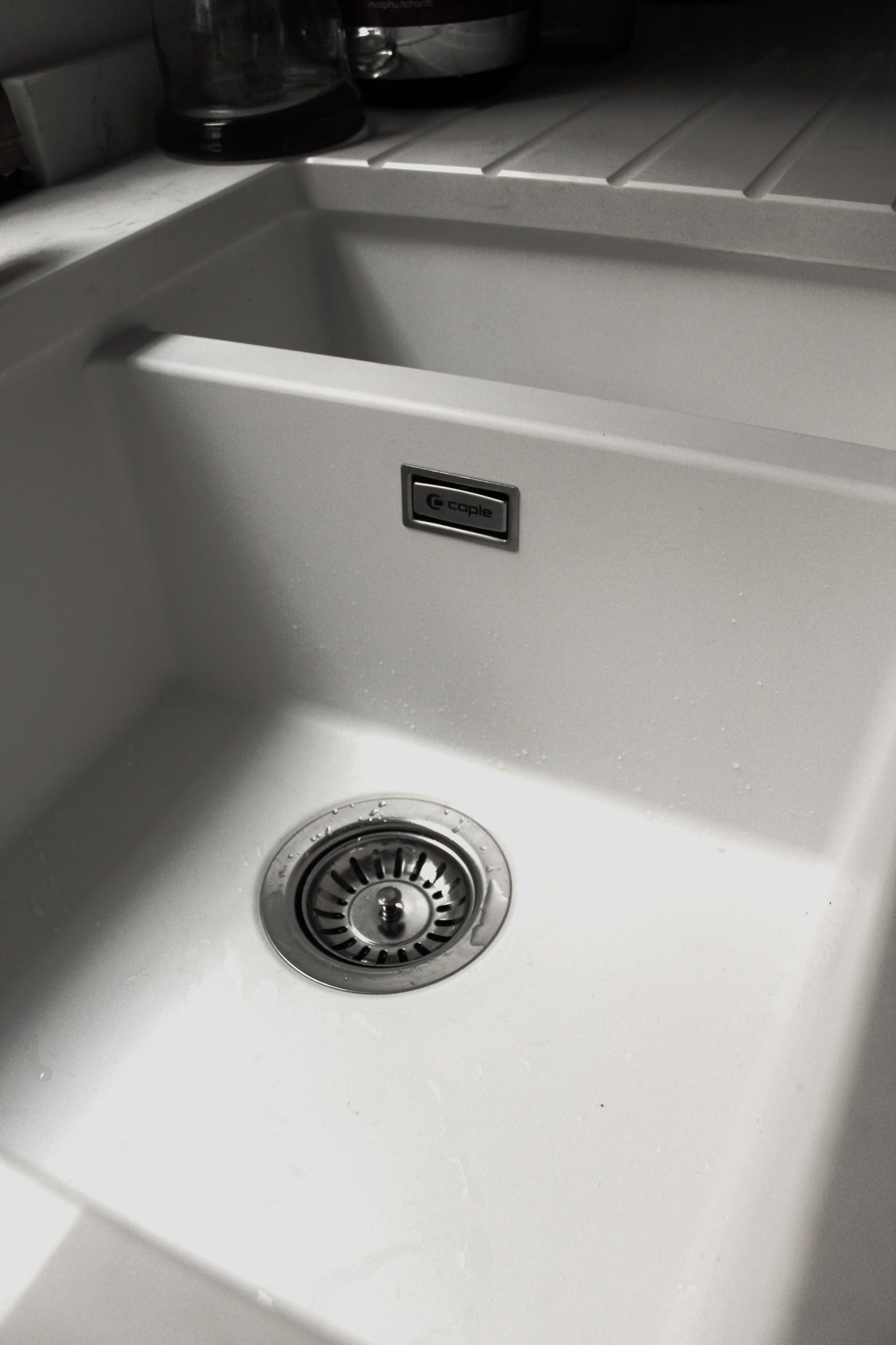
Our most specified sink material. Resistant to heat, staining, and scratching. Handles hard water better than stainless steel in terms of visible marks. Available in a good range of colours from black and anthracite through to light grey and white. The brands we use most are Caple, Abode, and Blanco.
One colour note worth knowing: black composite sinks show water marks significantly more than lighter colours, particularly in hard water areas like Leicestershire. If you love the look of a black sink, factor in more regular wiping down. White and light grey sinks are more forgiving with water marks but tend to show food stains and daily use more readily. It is a genuine trade-off rather than one being better than the other.
Stainless Steel
The default for a reason. Durable, hygienic, and versatile. Shows water marks and scratches more readily than composite, particularly with daily use. Prima and Rangemaster offer reliable entry-level options. Blanco sits at the premium end, with better gauge steel and a finer finish.
PVD-coated stainless steel, available from brands like Caple, gives you colour options such as brushed brass or matte black in a material that is more durable than electroplated finishes. A good solution if you want your sink to match the tap and kitchen hardware.
Ceramic
Beautiful in traditional and farmhouse kitchens. Hard and temperature-resistant. However, that hardness works against you in one important way: ceramic sinks can chip and break items placed in them more easily than composite or stainless, and a dropped cast iron pan can chip the sink itself. Over time, ceramic sinks can also develop “crazing”, which are very fine surface cracks caused by repeated temperature changes. It does not affect function but it is visible up close and the surface becomes harder to clean once it appears. Many ceramic sinks are also hand-cast, which means they can occasionally be slightly out of square. Worth being aware of, and worth checking the fitting tolerances with your cabinet maker before ordering.
Acrylic / Solid Surface
Used primarily as integral sinks formed into Corian or similar worktops. Seamless and hygienic. Not compatible with boiling water or hot pans unless the base includes stainless steel protection.
BOWL CONFIGURATION
- Single bowl. Maximises usable space. The right choice for most households with a dishwasher. Go as big as the cabinet allows.
- 1.5 bowl. The most common configuration. The smaller secondary bowl is useful for food prep and draining while the main bowl is in use. Note that a second bowl means additional plumbing under the cabinet, which takes up storage space.
- 1.75 bowl. Very similar to a 1.5 bowl but as the name suggests, the second bowl is slightly larger.
- Double bowl. Increasingly out of favour. Two smaller bowls are less practical than one larger one for the majority of kitchen tasks.
TAPS
A good tap is worth spending on. The cheaper the cartridge, the sooner it fails. We specify taps from Caple, Abode, and Blanco across most projects. Pull-out and pull-down spray taps are available across these ranges and genuinely useful in larger kitchens for rinsing and filling tall pots.
One thing worth thinking about early: the finish of your tap should relate to the finish of your handles, sockets, and any other kitchen fixtures. Brass taps with chrome handles and sockets looks unresolved, even when each individual piece is attractive. Decide on a finish direction for the whole kitchen and stick with it.
BOILING WATER TAPS
Quooker is the market leader and the only brand that genuinely delivers 100-degree boiling water, which matters for things like sterilising and blanching, not just making tea. Budget £1,200–3,000 depending on the model. The tank unit sits under the sink and needs to be factored into the storage plan below.
Quooker also offer an upgrade to include sparkling and chilled filtered water through the same tap, which removes the need for a separate filtered water unit on the worktop. If you drink a lot of sparkling or filtered water, it is worth considering at the design stage rather than trying to add it later.
We also supply boiling tap options from Caple, Abode and Prima at more accessible price points. These perform well for most everyday purposes, though they do not reach the same temperature as a Quooker and are not suitable for applications where true 100-degree water is needed.
The most common sink regret we hear is going too small. A 1.5 bowl sink that seems generous on paper can feel tight in a busy family kitchen. If you have the worktop space, size up.
FREQUENTLY ASKED QUESTIONS
Can I have an undermount sink with a laminate worktop?
No. Undermount sinks require a solid surface worktop such as quartz, granite, or Corian. The exposed cut edge of a laminate worktop is vulnerable to water ingress and will swell and deteriorate over time. If you want an undermount sink, plan for stone.
Is a boiling water tap worth it?
For most clients who drink tea or coffee daily, yes. The convenience is real and the tank unit under the sink is unobtrusive once planned in. If you rarely use boiling water for cooking and the kettle works fine for you, the case is weaker. If you want true boiling water at 100 degrees rather than near-boiling, Quooker is the only tap that delivers it.
What colour sink works best with a white kitchen?
Black composite is very popular against white cabinetry and holds its look well, though it needs regular wiping in hard water areas. White ceramic also works beautifully in a traditional setting. If maintenance is a priority, light grey composite tends to be the most forgiving on both water marks and daily staining.
Should my tap finish match my kitchen handles?
There is no right or wrong answer here, however we like to encourage people to match the tap, handles, sockets, and light fittings so they all relate in finish. It does not have to be identical across everything, but mixing warm brass with cool chrome across major fixtures in the same room can sometimes look unresolved. Pick a finish direction at the start and carry it through.